
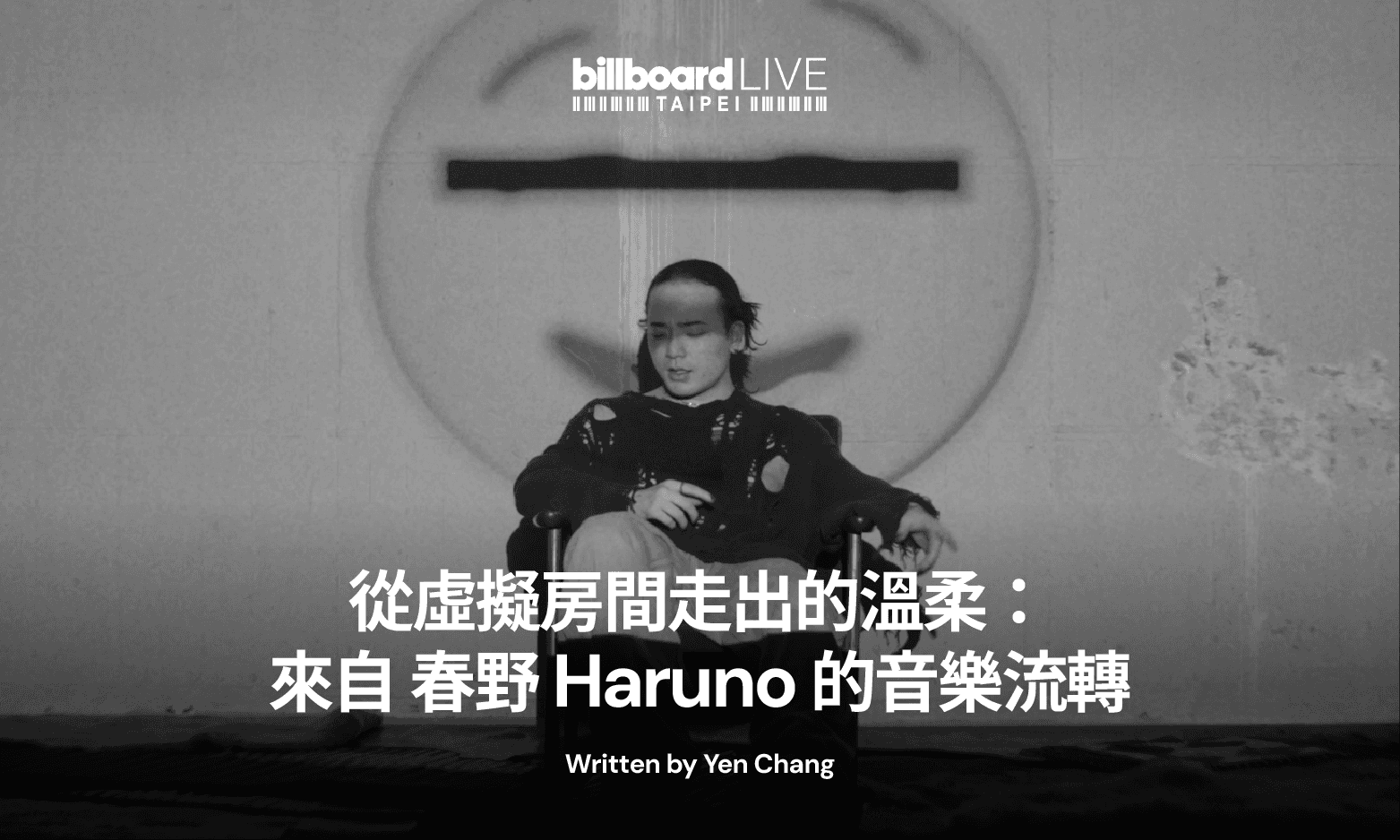

For many listeners, their first encounter with Haruno likely began with uploads on NICONICO, the Japanese video-sharing platform renowned for its flowing on-screen comments. Haruno is also one of the many artists who have chosen VOCALOID as a medium for musical creation.
Since its introduction in 2004, VOCALOID has remained a vital tool for artistic expression, with Hatsune Miku standing as its most iconic voice. Haruno’s track “Room” has become an entry point for countless listeners, offering a vivid reminder that Hatsune Miku’s identity is not fixed, but collectively constructed—shaped and redefined by the imaginations of innumerable creators.
There is something almost mystical about this process. Within this sonic space, and before this virtual presence, one feels as though their own soul can finally settle—gently, securely—finding a place to rest.
It often makes me wonder whether this might be a form of emo music unique to Japan. Haruno’s deep love for music fully blossomed through VOCALOID in those early days—an achievement that is far from easy. The process feels akin to waking from a dream that is profoundly liberating.
“Room” is a piece that invites listeners to let go of preconceptions and gently follow their intuition. What lingers most is the sense of Haruno as a genuinely gentle presence, conveyed not through words, but through sound itself.
At the age of 25, Haruno released his first full-length album, 25. It is a collection rooted in self-examination—an attempt to confront his own voice and rethink how self-identity can be strengthened. By facing the version of himself who once entered the world of Vocaloid out of insecurity about his appearance, Haruno also brings his identity as a “beatmaker” into sharper focus than ever before.
To understand what a beatmaker represents, one must look back to a pivotal moment in Haruno’s musical journey: his encounter with FKJ’s “skyline.” Through this track, he discovered that music could be both profoundly pure and vibrantly alive. More importantly, it revealed that vocals do not always need to occupy the foreground—they can function as a breathing instrument within the composition. Writing this now, it becomes clear just how deeply FKJ has influenced not only the sound, but also the mindset of countless musicians today, a ripple effect that is endlessly fascinating.
On 25, Haruno collaborated closely with producer A.G.O, and on the track “D(evil)” he invited the internet-born singer yama to join him. The song has since amassed tens of millions of streams on Spotify, along with over a million views on YouTube Music. Notably, Taiwanese artist Andr also collaborated with A.G.O just a few months ago on “Cat & Mouse,”signaling a quiet but meaningful convergence between the Japanese and Taiwanese music scenes.
Two years ago, Haruno collaborated with Yellow Huang (Huang Xuan), one of the most compelling voices of Taiwan’s new generation. To me, this stands as one of the clearest expressions of his genuine curiosity toward the Taiwanese music scene.
In interviews, Haruno has spoken about his fondness for Korean creators and singers, as well as his active efforts to learn the Korean language. Artists like DEAN, rapper ZICO, and Jinwoo—a Canada-based musician I personally fell in love with at first listen—offer a glimpse into the breadth and sensitivity of his musical influences.
If you’re drawn to this kind of music, you’ll quickly sense that Haruno lives through sharing sound. He openly offers what he listens to and loves, allowing those influences to flow outward rather than keeping them contained. With even a basic understanding of Japanese, it becomes possible to find your own ideal listening perspective within Haruno’s work—one that gently guides you toward a more comfortable, more unguarded version of yourself.
On February 24, Haruno will take the stage at Billboard Live TAIPEI for his first-ever headline show, presenting a complete and fully realized performance under his own name.
What I’m most eager to witness is how he will reinterpret “Room,” the iconic Vocaloid-era track, through the lens of who he is today. Just as compelling is the hope that his collaboration with Yellow Huang will once again come to life—this time, in the heart of Taipei’s Xinyi District.
載入中... (EventEmbed: 63b60696-0c59-45f3-ab29-777f118cf5bb)
Article Author

based in Taipei, London 正修習爵士長號、2025年在全英音樂獎和ezra collective 一起慶祝他們獲得最佳樂團獎,來回台灣和夥伴們玩了一個叫做野巢的組合,持續學習!