
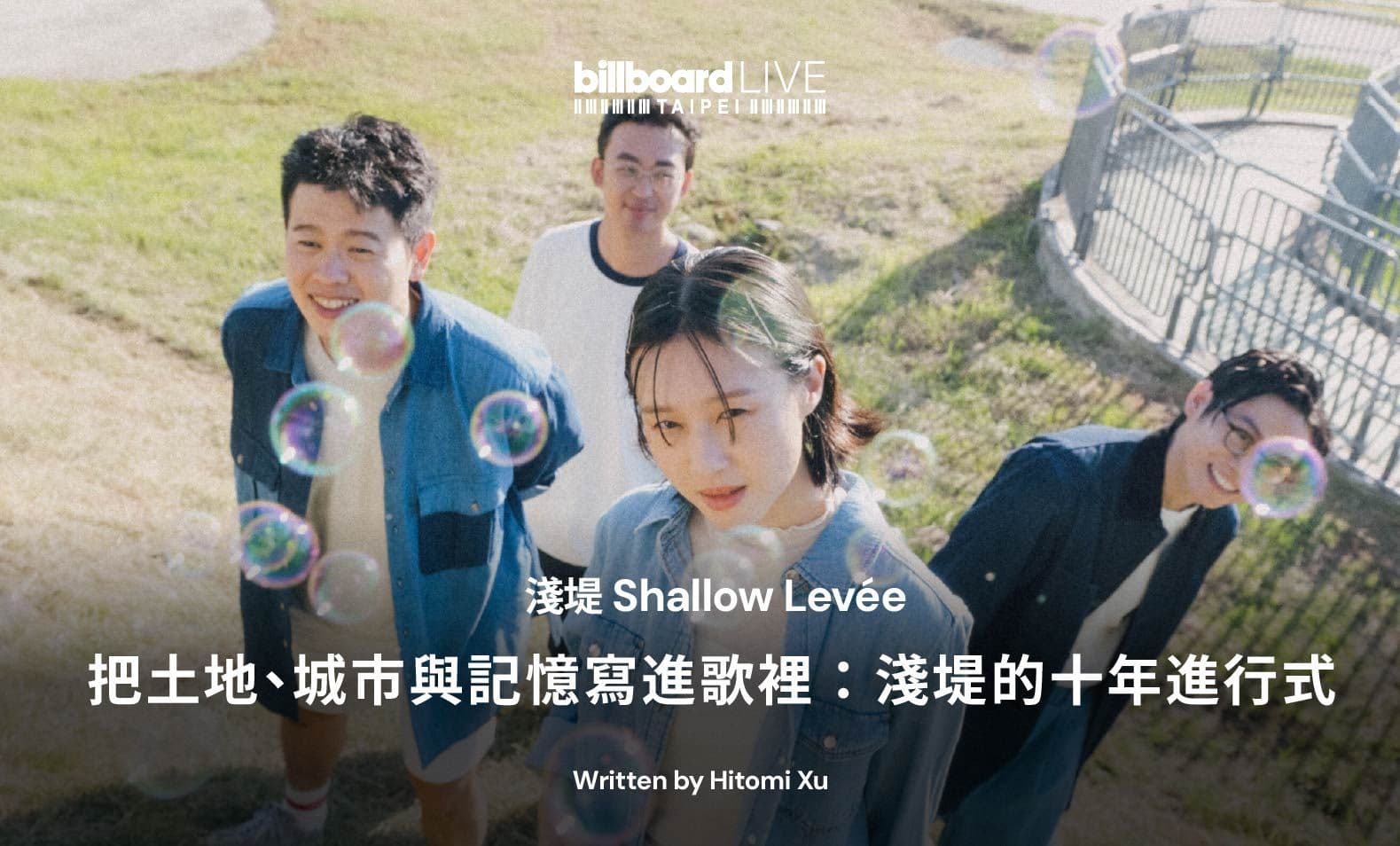

Hitomi:
This marks the second interview between shallow levée and Billboard Live TAIPEI. This time, we wanted to dig deeper into the story of the band itself—especially as they approach a significant milestone: next year will mark their tenth anniversary.
shallow levée:
It’s hard to believe—it’s already been ten years.
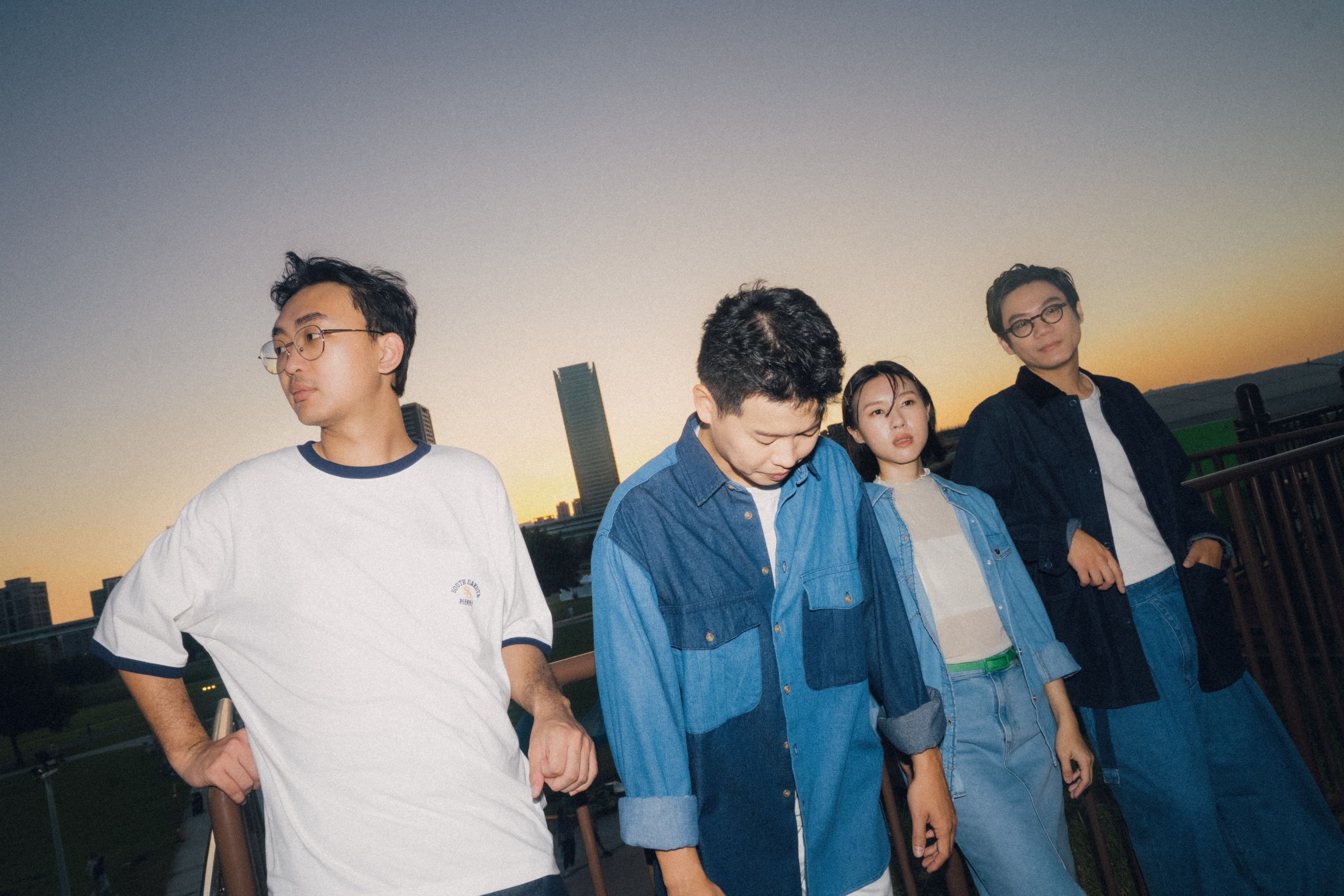
Hitomi:
Do you remember what first brought the band together?
shallow levée:
All of us share a deep connection with Kaohsiung. Some of us were born there; others grew up or studied in the city. Our earliest experiences playing music together began within the university circles in Kaohsiung.
Yiling had always loved songwriting, writing and performing her own material on guitar. But singing alone felt isolating—music, after all, is more fun when shared. That impulse led her to gather friends from university, and the band naturally took shape.
In the very beginning, we even went by the name “Tsai Yi-Ling Band.” Over time, though, we wanted a name that could represent the collective identity of the group. We drew inspiration from the song “Shallows” by the British band Daughter, a track we all admired.
Kaohsiung is also a coastal city, defined by seawalls and embankments, which led us to incorporate the French word “levée.” Combining these elements, the name shallow levée was born.
Hitomi:
The addition of a French word is a fascinating touch.
Fang-Bo:
We’ve always wanted to hear a French person pronounce it properly, at least once.
Hitomi:
(Laughs) That actually sounds like the perfect concept for a video project. Looking back from your early days to now, which releases or tours do you especially want to revisit with your listeners?
shallow levée:
We formed the band in 2015, and the following year we released our first EP, Demo.1. One of its tracks, “Excavator,” was fortunate enough to be nominated for Best Rock Single at the Golden Indie Music Awards.
Our earliest work was closely tied to themes of ecology and social issues, and we became known for writing and performing in Taiwanese—a foundation that shaped how many listeners first encountered our music.
In 2017, we released the EP Soup and Sea. For the physical edition, we presented the band members in a format resembling a nutritional label, as if the album itself were a recipe—an expression of the playful, conceptual side of our work.
The title of that EP eventually became the name of the company we later founded together.
Hitomi:
Soup and Sea is one of my personal favorites. To me, it carries a distinctly Kaohsiung warmth—a gentle, swaying quality that feels deeply rooted in the city.
shallow levée:
We still perform songs from Soup and Sea quite often at festivals. In 2020, we released our first full-length album, An Incomplete Village, which gathers ten songs written from the band’s formation up to that point.
At the time, we were constantly traveling between Kaohsiung and Taipei, and the lyrics reflect that sense of movement—of shuttling between cities while engaging in an ongoing dialogue with ourselves.
Our second album, The Road to the Wedding, grew out of the experience of attending a close friend’s wedding. We wanted to translate our blessings and mixed emotions surrounding life’s transitions into music.
It was also the first time we experimented with a crowdfunding-based pre-order model, and the response we received within just a week was incredibly encouraging. More importantly, it marked the beginning of a deeper, more direct connection with our listeners.
Hitomi:
It really feels like shallow levée has a friendship-like relationship with your fans. During the “Island Tycoon 2.0” tour earlier this year, so many listeners followed you across Taiwan.
You also spend a lot of time talking with fans after shows—it creates such a warm, endearing atmosphere.
shallow levée:
We’ve always wanted to imagine live performances differently, to break away from the conventional live house format. Traveling to different towns across Taiwan and accompanying listeners on their way “home” has been central to that idea.
Perhaps it comes from our attention to land-related issues, and from our own understanding of what it means to leave home in order to build a life elsewhere. Our listeners genuinely feel like friends to us.
After releasing our albums, we began performing on a wider range of stages. Festivals like Megaport Festival in Kaohsiung and Loner Fest in Tainan were just the beginning. We were also invited to events across Asia, including Greenplugged in Korea, BiKN Festival in Tokyo, and the Huayi Festival in Singapore.
One particularly memorable moment was a collaborative performance in Taipei with Australian artist Jaguar Jonze. Despite differences in cultural background and musical language, the connection on stage felt natural and powerful—a true experience of cross-cultural exchange.
Hitomi:
Recently, a greatest-hits vinyl released in Japan has been getting a lot of attention. Could you tell us about that journey?
shallow levée:
It’s been a deeply moving experience for us. The Japanese compilation, Shallow Levée BEST COLLECTION, brings together many of the songs our listeners have held close over the years, spanning different phases of our career—from tracks like “Yonghe” and “Hard-Earned” to “Falling Asleep.”
More than a simple collection, the record feels like our story taking physical form—something tangible, something that can be held and preserved. Initially, we never imagined releasing a vinyl edition, let alone doing so in Japan.
The process involved extensive conversations about collaboration, translation, and understanding a different market. In many ways, it felt like re-examining our own work, constantly asking ourselves: How might these songs be received by listeners in Japan?
When we finally held the finished vinyl in our hands, it felt as though years of effort and the support of our listeners were suddenly connected in a single moment.
There were plenty of challenges along the way—sound mastering, artwork design, rights coordination—but the final result left us genuinely happy. For us, it doesn’t feel like a conclusion so much as the beginning of a new chapter.
Hitomi:
Speaking of your connection with Japan, did you have any prior impressions or memories associated with the Billboard Live brand?
shallow levée:
This is actually a story worth sharing. When we visited Japan for the first time, we made a point of going to Billboard Live together with Yong-Xiang, the guitarist from DSPS, who was studying guitar there at the time. We saw a performance by the legendary jazz guitarist David T. Walker.
We were deeply into jazz back then, and of course, he’s a musician who played on records by Marvin Gaye and Stevie Wonder—so it felt incredibly meaningful.
The venue itself was beautiful. Everyone was dressed impeccably, enjoying the music in a refined, elegant atmosphere. What stayed with us was the sense that both the audience and the performers were fully present—deeply immersed in the music and treating it with genuine respect.
That memory shapes how we approach this upcoming performance as well. We want to bring the same attentiveness and sincerity to everyone who joins us at Billboard Live.
Hitomi:
That’s such a wonderful story… I never knew there was that kind of connection with Billboard Live.
Before we wrap up, I have to ask—what’s next for you in the coming year?
shallow levée:
Well, we’re planning to release our third album around the middle of next year. It will also feature our first-ever collaborations with overseas musicians, which we’re really excited about.
Things have been intense lately—we’ve been busy from start to finish this year—but we’ve prepared a lot of new material to share. Honestly, we can hardly wait for people to hear it.
Article Author

台北出生的散文女。依序著有《裙長未及膝》、《刺蝟登門拜訪》、《明天還能見到你嗎》。不寫書的時間是樂團小幫手,不在後台的時候,通常都在台下。