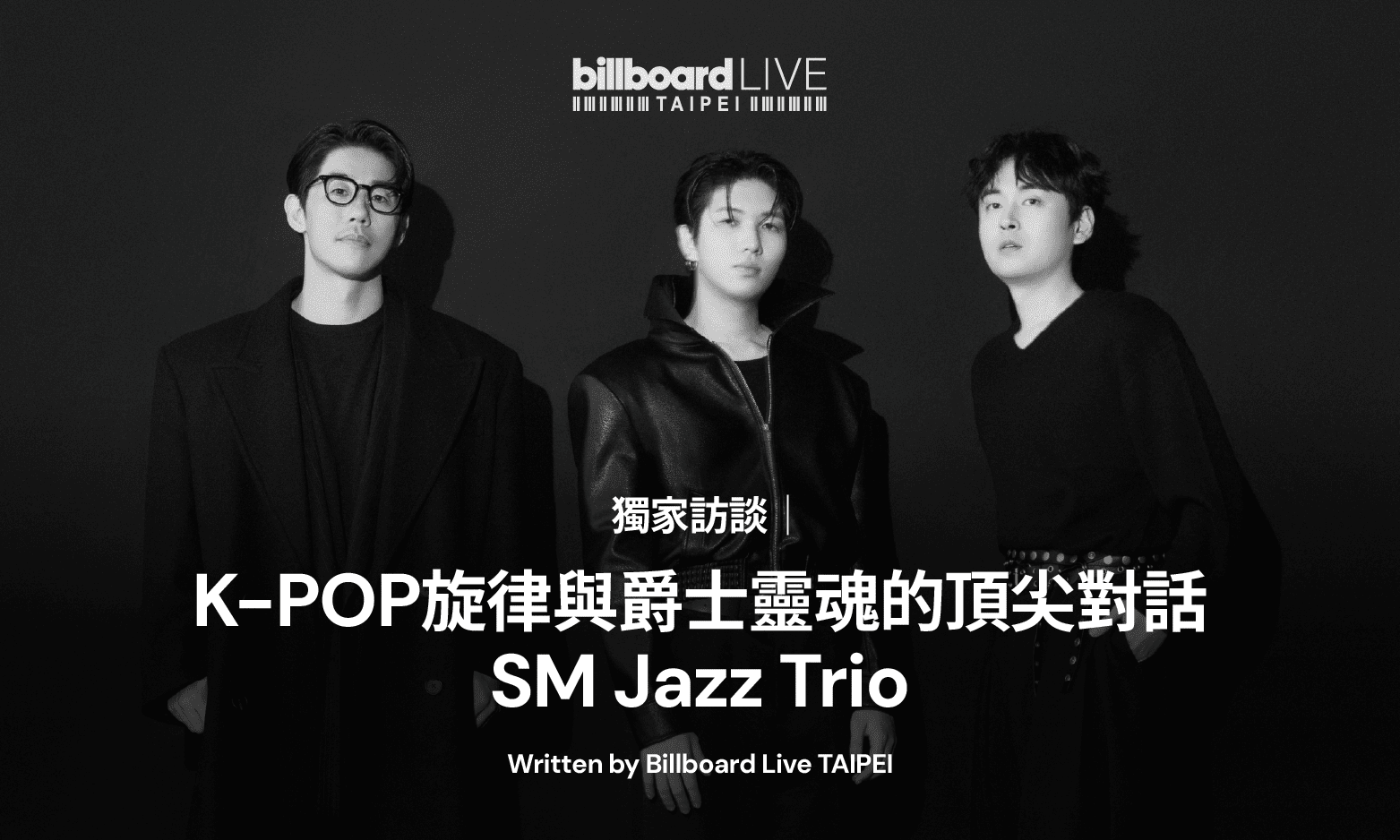
What kind of chemical reaction occurs when the unforgettable K-Pop melodies of Girls' Generation, aespa, and EXO meet the sophisticated harmonies and improvisational spirit of jazz? SM Jazz Trio—composed of three top-tier musicians: pianist Yohan Kim, bassist Hogyu Hwang, and drummer Jongkuk Kim—goes beyond mere rearrangement. At the heart of their work lies the "Interplay" of a jazz trio, transforming familiar K-Pop hooks into artistic spaces brimming with free energy.
In this exclusive interview, the three members share how they meticulously balance melody and improvisation without compromising the original charm or fans' memories. In addition to revealing plans for an upcoming original album, they expressed a high level of interest in Taiwanese music, even mentioning their desire to challenge the works of Jay Chou and Jolin Tsai, and looking forward to deep collaborations with Taiwanese musicians in the future.
1. For many fans, K-pop and Jazz seem like an unlikely connection, especially since K-pop often features strong hooks and rhythms. When rearranging them into jazz, how do you strike a balance between "preserving the original's iconic melody" and "showcasing the soul of jazz improvisation"?
- Yohan Kim: While preserving the symbolic melodies and core characteristics of the original songs, we incorporate jazz-style harmonies, rhythms, and improvisational elements. We strive to find a balance that presents the work with a fresh auditory experience. For us, it is important to naturally showcase SM Jazz Trio’s unique musical style and interpretation without losing the charm of the original.
- Hogyu Hwang: We believe that preserving the symbolic melody and emotion of the original is the most important starting point. K-pop melodies and hooks are usually very distinct, so it is vital not to lose the impression they originally brought. On this foundation, we add jazz-specific flexibility in harmony and rhythm, along with the improvisational dialogue of the trio, to create a new musical texture. When this balance is achieved, we can preserve the original charm while naturally expressing our own musical language.
- Jongkuk Kim: Fundamentally, we believe that keeping the melody at the core is most important. K-pop songs possess iconic melodies that many people remember and love. On this basis, we rearrange by adding jazz elements. We place great importance on the "Interplay" inherent in a piano trio—the musical dialogue formed by three performers listening and responding to one another. We treat the original melody as a core axis, creating new musical spaces around it through rhythm, harmony, and improvisation.
2. With so many classic SM songs, you have rearranged many tracks. What is your primary criterion for song selection? Which song was the most challenging to rearrange, and which one would you like to challenge next?
- Hogyu Hwang: When selecting songs, we first see if the track aligns with the sound of SM Jazz Trio. We also value whether we can add our own new interpretation while preserving the iconic melody. It’s hard to pick just one "most challenging" song because every original has a distinct personality and exists in fans' memories. Thus, letting it be reborn naturally through the language of a jazz trio without destroying existing impressions is a major task. We believe SM fans should immediately feel an emotional connection upon hearing the melody, so we respect the melody as much as possible while putting a lot of effort into the sound, harmony, and rhythm to present a more sophisticated and profound expression. In the future, we hope to reinterpret more great SM songs. Meanwhile, we are preparing an original album focused on SM Jazz Trio’s own compositions, which is a very exciting project for us.
- Jongkuk Kim: Many SM songs are works we naturally encountered while learning music and growing up. Therefore, the most important thing for us isn't just how famous a song is, but how we can reinterpret it in a new way. Songs with clearer melodies are both fun and challenging when thinking about how to reinterpret them through jazz harmonies or rhythms. It’s hard to pick a representative one, but in every arrangement, we ask ourselves: "How can we present new musical colors for this song within the relatively minimalist instrumentation of a piano trio?"
- Yohan Kim: We focus on whether the original song can merge naturally with our musical style. If our interpretation creates a good musical chemistry, that becomes a key criterion. Every song we have rearranged so far has a different meaning and was a challenging creative process. Personally, I would love to reinterpret the works of Hearts2Hearts in the style of SM Jazz Trio one day.
3. What is your impression of Taiwanese fans or music culture? Are you interested in including classic tracks from Taiwanese artists (such as Jay Chou or Jolin Tsai) in your jazz arrangement plans?
- Jongkuk Kim: The artists you mentioned are great musicians who cannot be ignored when talking about Asian music. I have respected them for a long time. If given the chance, rearranging their work into jazz would be a very interesting creative experiment. Furthermore, it would be an honor to communicate or even collaborate with them musically in the future.
- Hogyu Hwang: I have an impression that Taiwanese music fans can appreciate music deeply and give artists warm energy and support. Additionally, Taiwanese music culture is rich in melody and emotional expression, so I believe reinterpreting it through jazz would lead to charming results. If there's an opportunity, I would love to reinterpret the music of Jay Chou or Jolin Tsai through our unique jazz language. I sincerely look forward to direct collaborations as well.
- Yohan Kim: My impression is that Taiwanese fans are very passionate and know how to appreciate various genres deeply. While there are no concrete plans yet, rearranging the representative works of artists like Jay Chou or Jolin Tsai would be a great challenge.
4. Have you visited Taiwan before? What was your impression? Is there anywhere specific you want to visit or any snacks you want to eat?
- Hogyu Hwang: I visited Taiwan for a performance a few years ago and it left a deep impression. I loved the vitality of the city, the warm atmosphere, and the energetic music environment. I remember tasting Taiwanese Kaoliang liquor for the first time with trumpeter Alex Sipiagin. He shared the story of his work "38-58," inspired by the 38% and 58% alcohol content, making the memory even more unforgettable. I look forward to walking the streets and trying various street foods.
- Jongkuk Kim: Two years ago, I visited with pianist Aaron Goldberg. The atmosphere of the city left a deep impression. I especially love Xiaolongbao (soup dumplings) and want to try more street food this time. I’ve heard about the opening of Billboard Live Taipei and have always wanted to visit. Being able to perform there is very exciting for me.
- Yohan Kim: I haven't visited Taiwan in person yet. Though I’ve felt the vibe through videos and photos, I haven’t stepped on the land to feel the air and passion. I am very excited to experience Taiwan's energy through this performance.
Whether it’s a heart-stirring K-Pop melody from your memories or an unpredictable surprise in a jazz improvisation, SM Jazz Trio will reshape them for you live. On March 22nd, we invite you to Billboard Live TAIPEI to immerse yourself in the elegant variations brought by SM Jazz Trio. Between the familiar and the novel, find the jazz blood that belongs to this spring night. 🎵